Why Are Native Plants (and Insects) So Important?
Native Plants, Small Spaces, and the Power of Stewardship
Some of the most meaningful ecological change can begin in the smallest of spaces right here in our city or in your home landscape! Converting a small portion of your lawn, backyard, a parkway, adding a few rooftop containers to a native landscape starts with . Starting small has the power to influence an entire neighborhood—and who doesn’t want to help start a trend that’s good for the planet?
Native plants sustain the food web that supports human life. We are far more connected to plants (and nature) than we often realize, especially amid the fast pace of city living. Restoring our home gardens and landscapes with native plants is one of the most direct ways we can care for life, including our own. When caterpillars disappear, birds decline, and the impacts ripple outward—affecting soil health, food systems, and human well-being. Native plants provide essential food and habitat for the insects that feed birds, protect the soil that grows our food, and uphold the web of life that ultimately sustains us. When native plants are lost, birds struggle to raise their young and the systems we depend on begin to weaken. Our landscapes are not separate from human health; they are a crucial part of it. Choosing native plants is one of the simplest ways we can restore balance, starting right outside our doors.
How We Got Here: From Prairies to Lawns
Before Chicago was a city, it was part of one of the most diverse ecosystems in North America: tallgrass prairie, savanna, wetlands, and oak woodlands shaped by fire, grazing, and seasonal change. These landscapes supported thousands of plant species, insects, birds, and mammals, all intricately connected.
As European settlement expanded, these native systems were rapidly replaced. Prairies were plowed under for agriculture. Urban development fragmented remaining habitat. At the same time, cultural values shifted. Plants from Europe and Asia were imported as symbols of refinement and wealth, while expansive lawns became a status symbol, an idea reinforced after World War II by suburban development and industrial lawn-care practices.
Modern farming and landscaping further accelerated the problem. Monocultures, chemical inputs, and ornamental plants chosen for appearance rather than function became the norm. Lawns spread, despite offering almost no ecological value. Over time, we normalized landscapes that looked orderly but were biologically empty.
This wasn’t an intentional act of harm, but to avoid further consequences and loss of species, we have to act now. By prioritizing uniformity and aesthetics over ecology, we disconnected our homes from the systems that support clean water, healthy soil, pollination, and resilient food webs.
Today, we have an opportunity, and most importantly a responsibility, to rethink those priorities.
Why Native Plants (and Insects) Matter
Entomologist and author Doug Tallamy has spent decades helping us understand a simple but powerful truth: plants are the foundation of the food web, including the systems that support our own food and health. Insects depend on plants, and human life depends on insects—whether we like it or not.
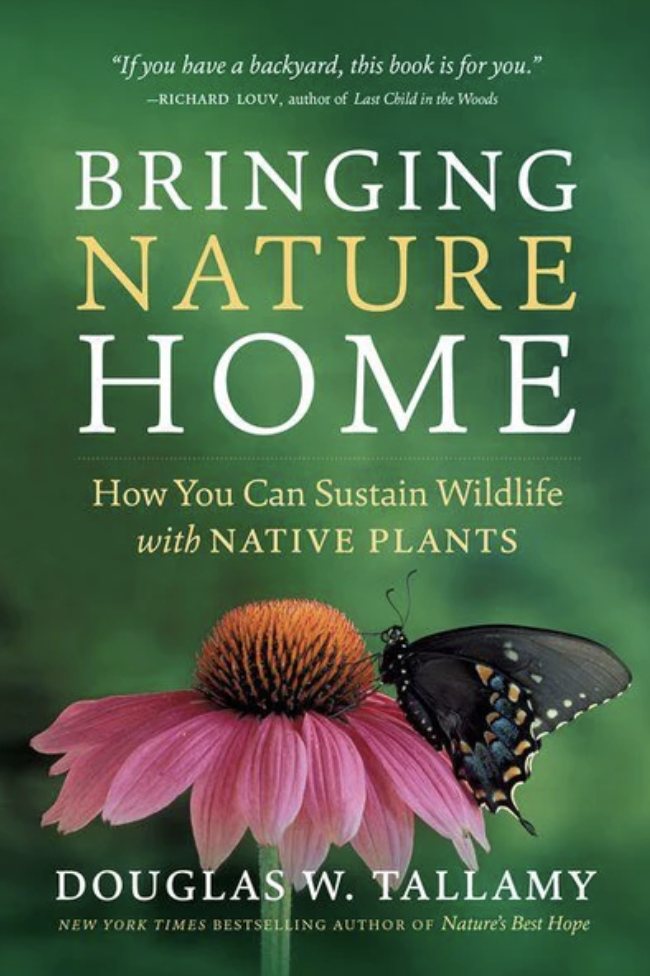
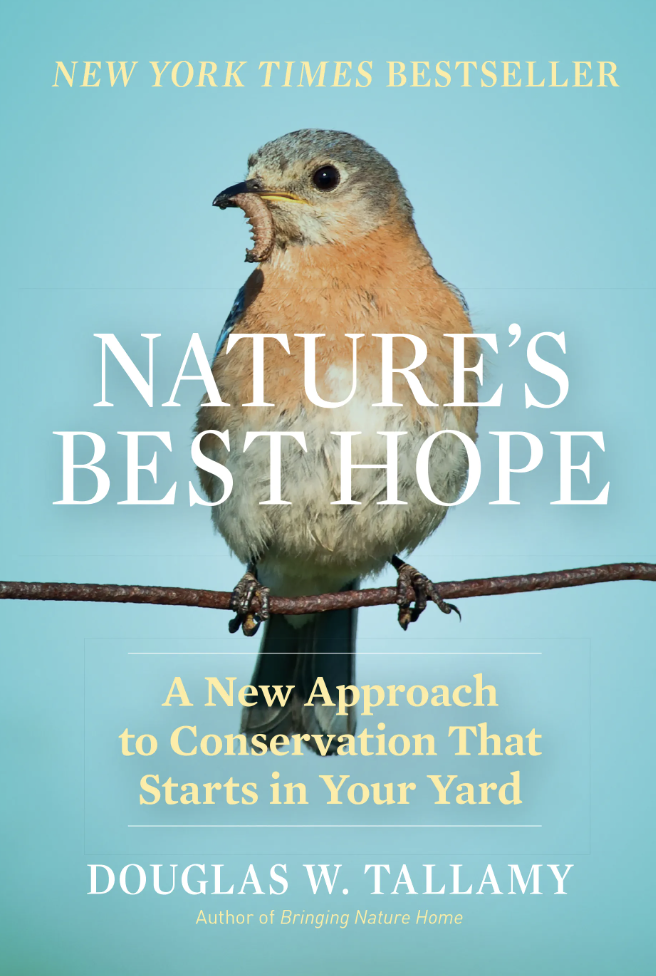
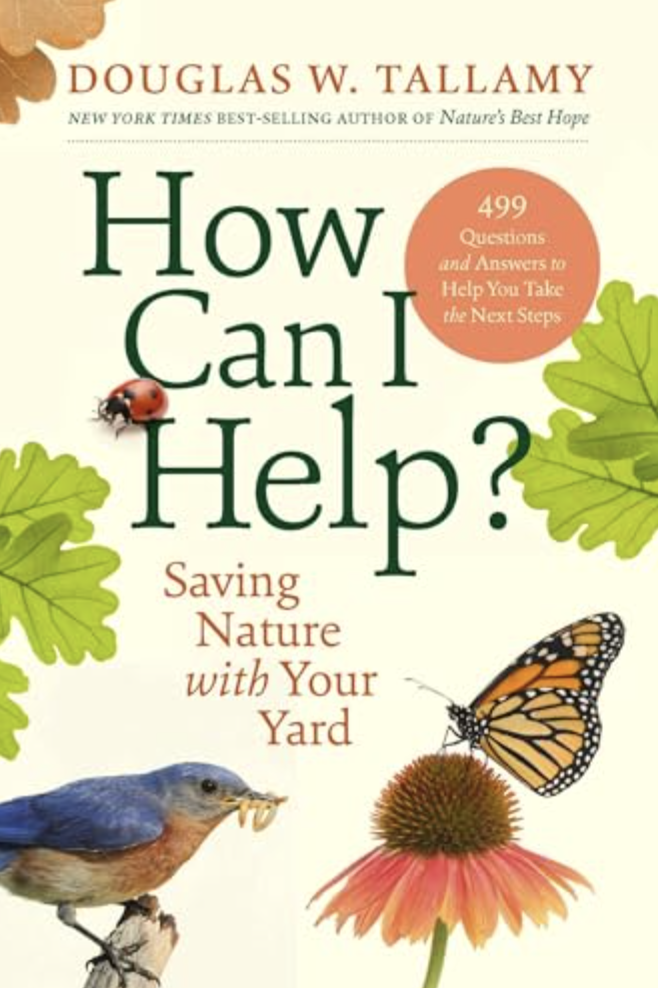
As E.O. Wilson famously said in 1987, “Insects are the little things that run the world.” Tallamy’s research and advocacy have carried this message forward in books like Bringing Nature Home, Nature’s Best Hope, and How Can I Help? He explains that native plants and native insects coevolved over thousands of years, forming relationships so specific that many insects cannot survive without the plants they evolved alongside. In landscapes dominated by non-native plants, insect populations can decline dramatically, triggering cascading losses throughout the ecosystem. Since the 1970s, global insect populations have declined by an estimated 45%, a loss Tallamy describes as insects disappearing from our “ecological bank account.”
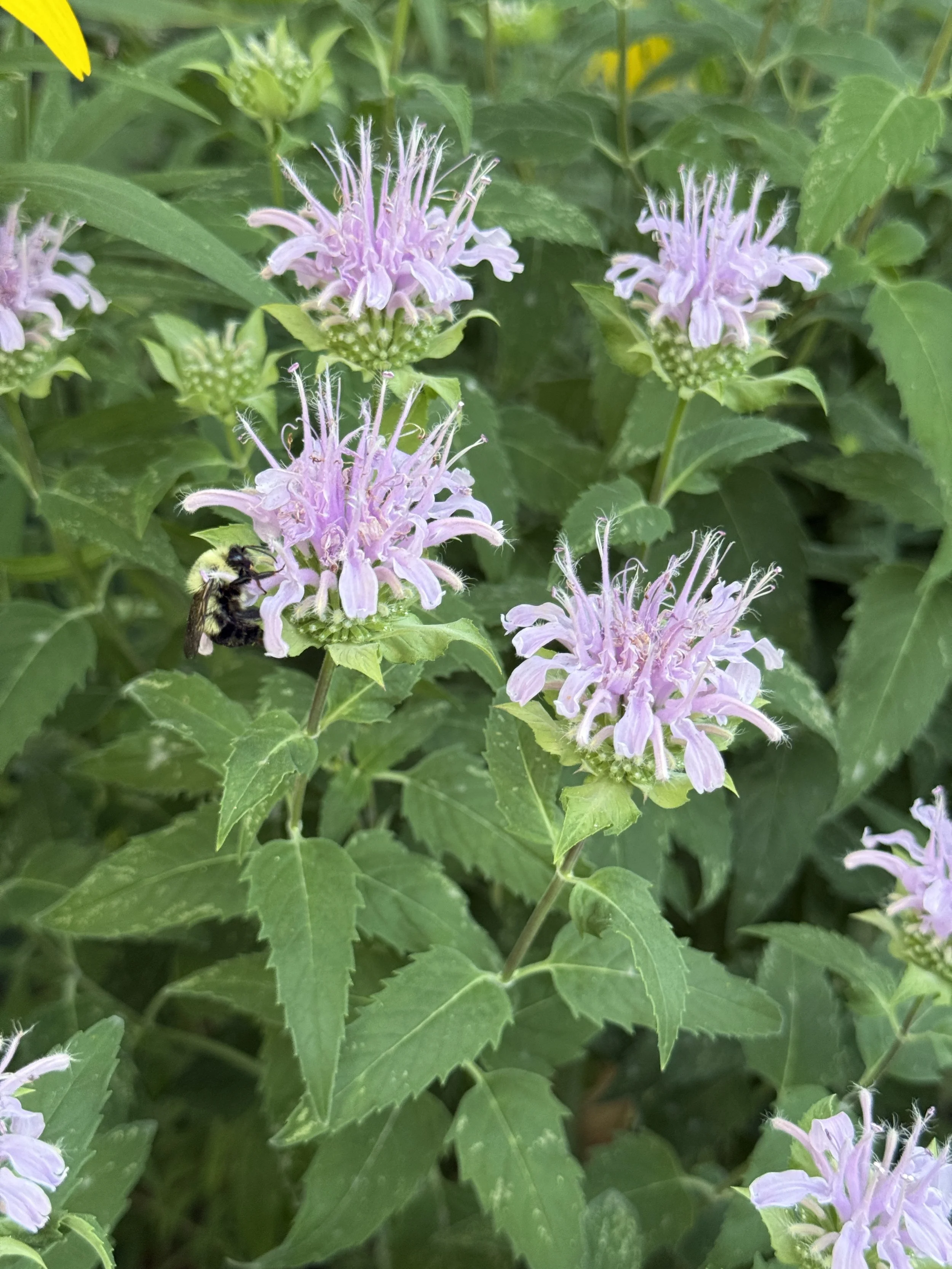
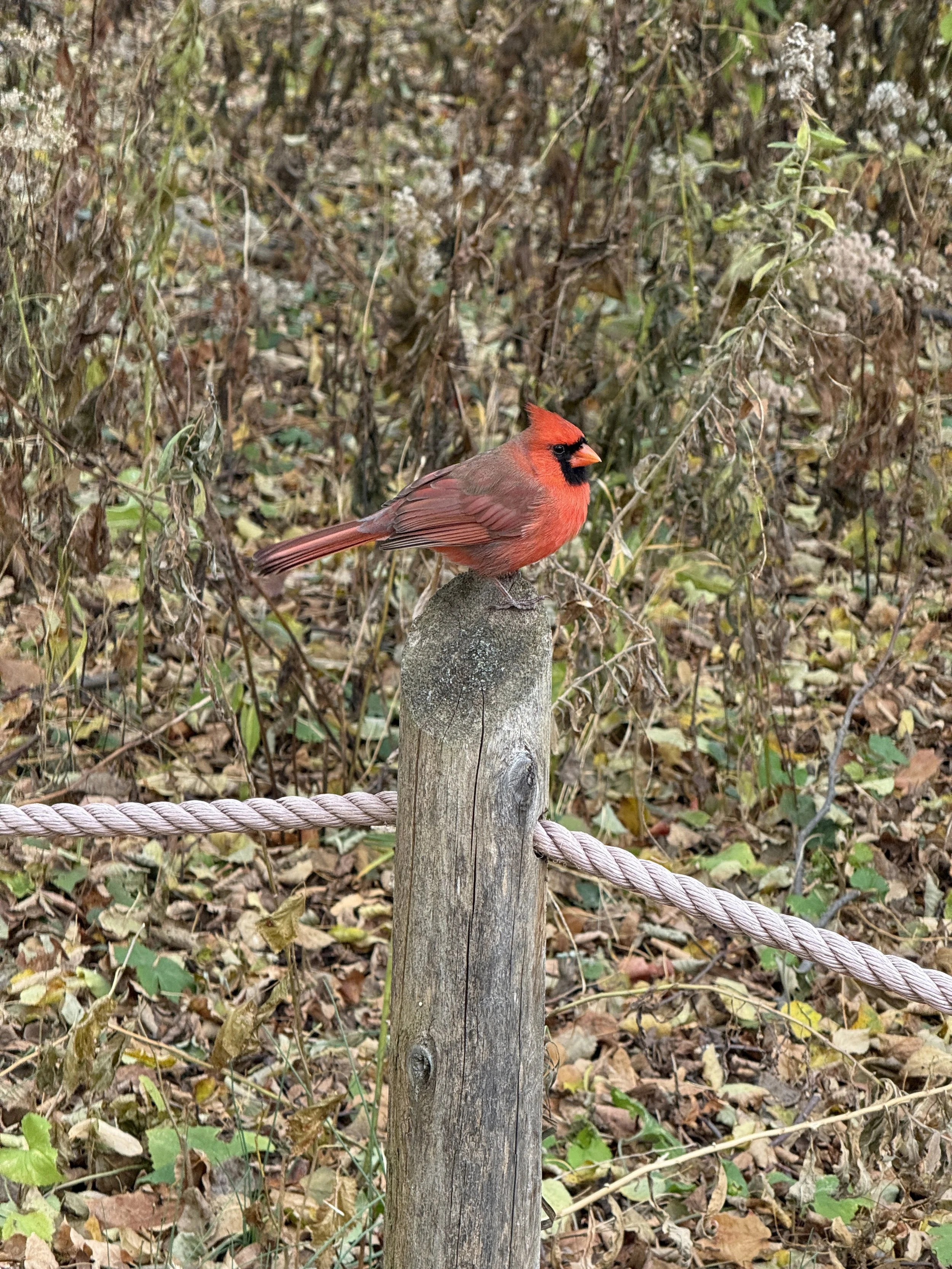
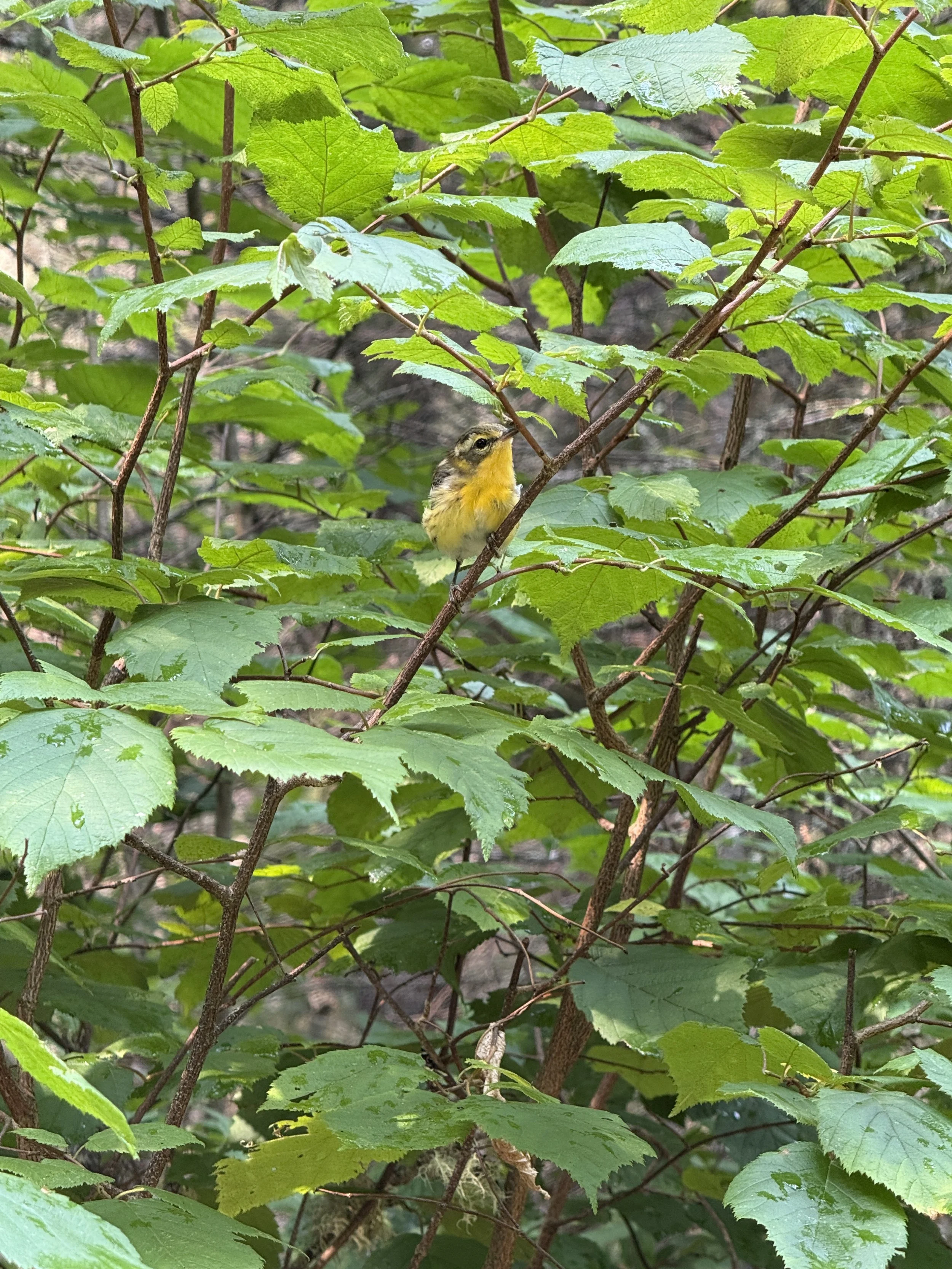
Many caterpillars—the primary food source for baby birds—can only eat specific native plants. Without those plants, caterpillars disappear, and birds struggle to raise their young. Native bees and other pollinators face similar challenges, and their decline directly reduces pollination—the process responsible for producing much of the food we eat, from fruits and vegetables to nuts and seeds. As Tallamy reminds us, “Insects are the basis of food webs and transfer energy to all other animals.” Losing insects means losing the processes that make life on land possible.
Insects pollinate crops, recycle nutrients by breaking down dead and decaying material, and serve as essential food for birds, bats, and many mammals. When these connections unravel, ecosystems fail—and human systems fail with them.
When native plants are replaced with turf grass or ornamental species that insects can’t use, the food web breaks down right outside our doors. But when we bring native plants back—even in small ways—we help restore the connections that support birds, pollinators, healthy gardens, and ultimately, ourselves.
Keystone Plants: What To Plant For The Biggest Impact In Your Landscape?
The concept of keystone species comes from ecology and refers to plants or animals that have an outsized impact on the health of an ecosystem relative to their abundance. Just as a keystone holds an arch in place, these species support entire ecological systems. When they are removed, the structure around them begins to collapse.
Entomologist Doug Tallamy applies this concept to plants, identifying keystone plants as those that support a disproportionately large number of insects—especially caterpillars and native bees—which are essential to the food web. Many insects are specialists, meaning they can only survive on specific plants they evolved alongside. Without their keystone plants, these species simply cannot complete their life cycles.
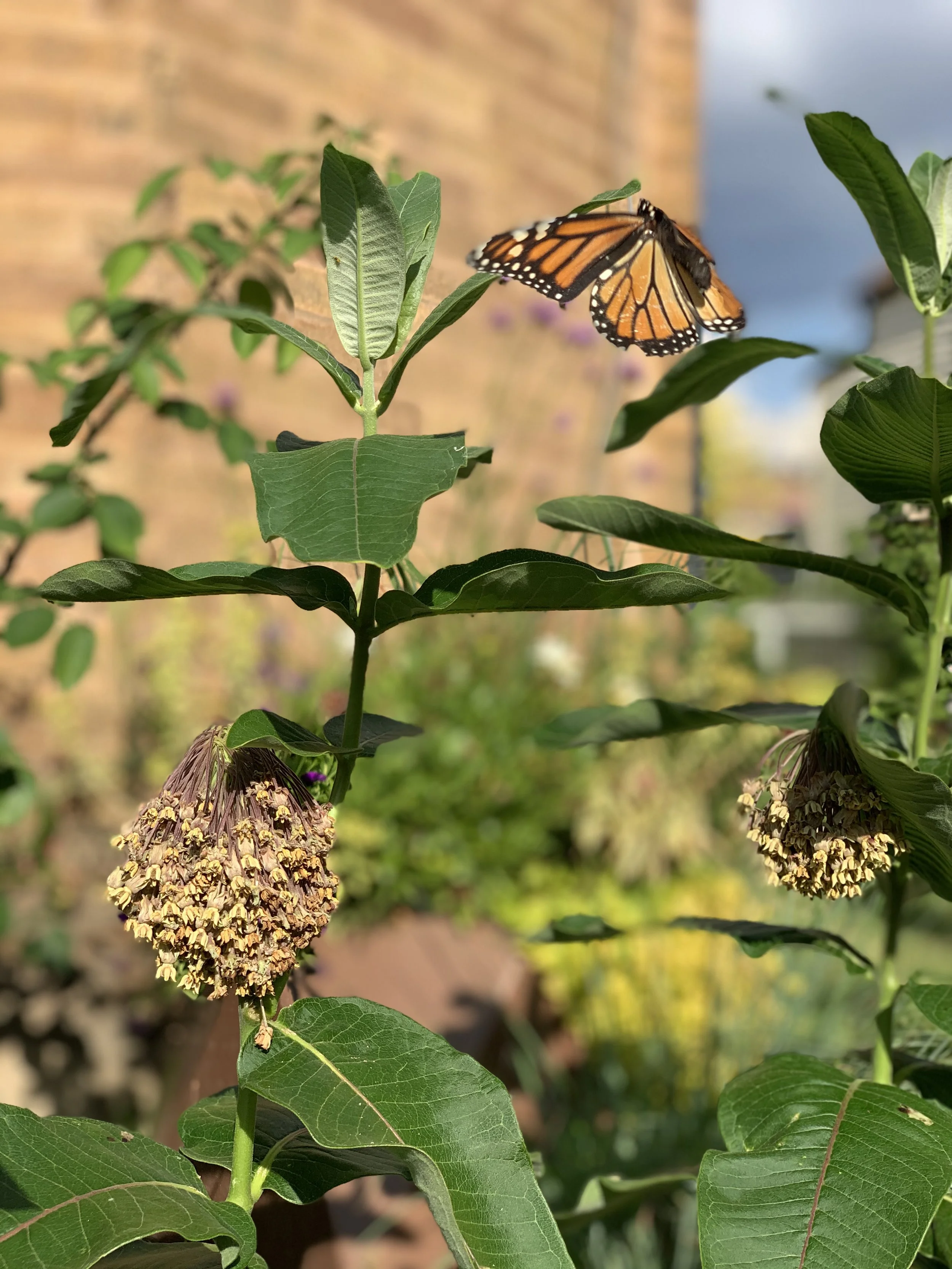
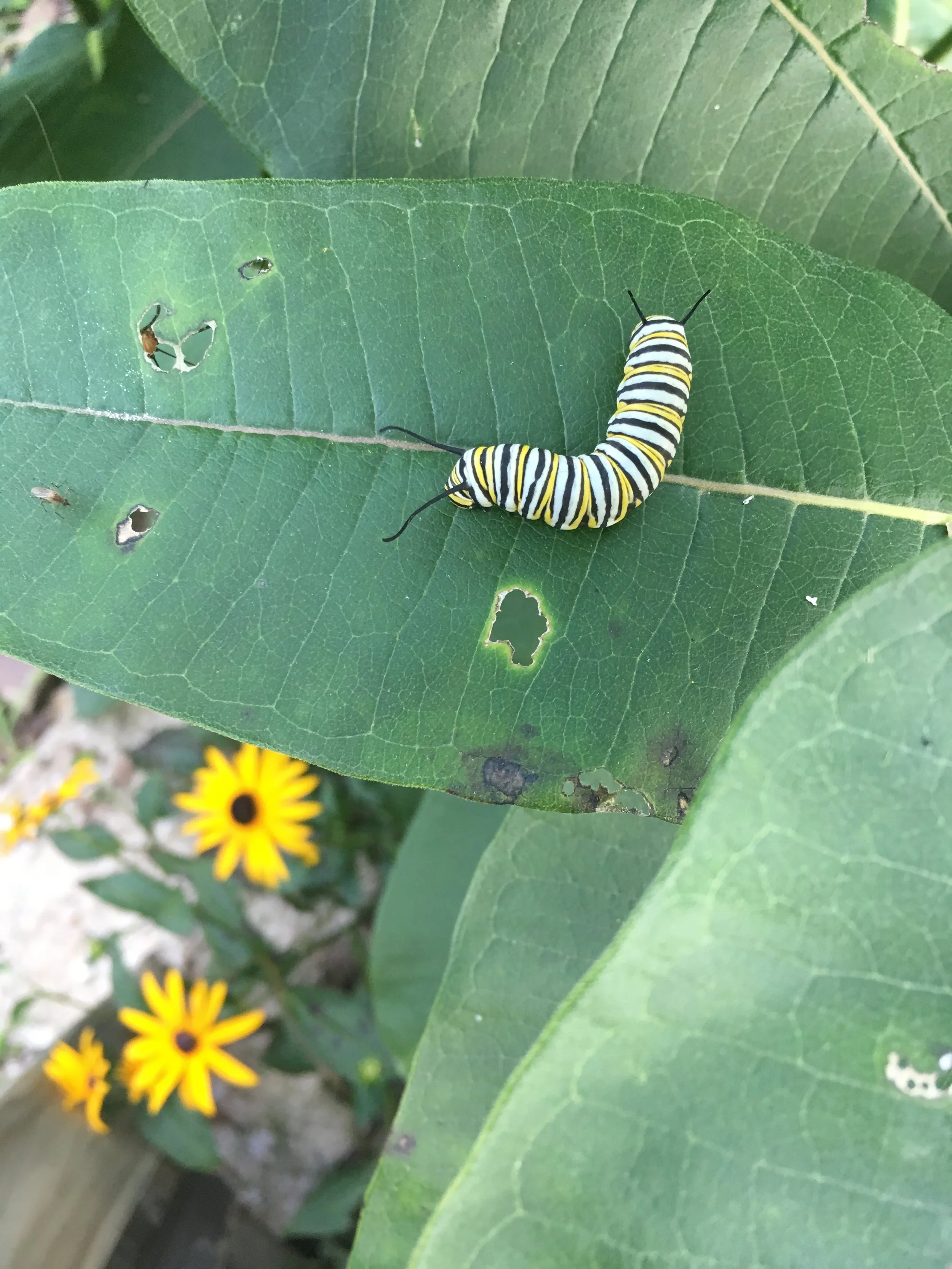
A well-known example is the monarch butterfly. Monarchs depend entirely on milkweed (Asclepias spp.) for reproduction and survival. Female monarchs lay their eggs exclusively on milkweed. The caterpillars can only eat milkweed leaves, and the plants also provide nectar for adult butterflies. Without milkweed, monarchs cannot reproduce—and without reproduction, populations collapse. There is no substitute plant that fills this role.
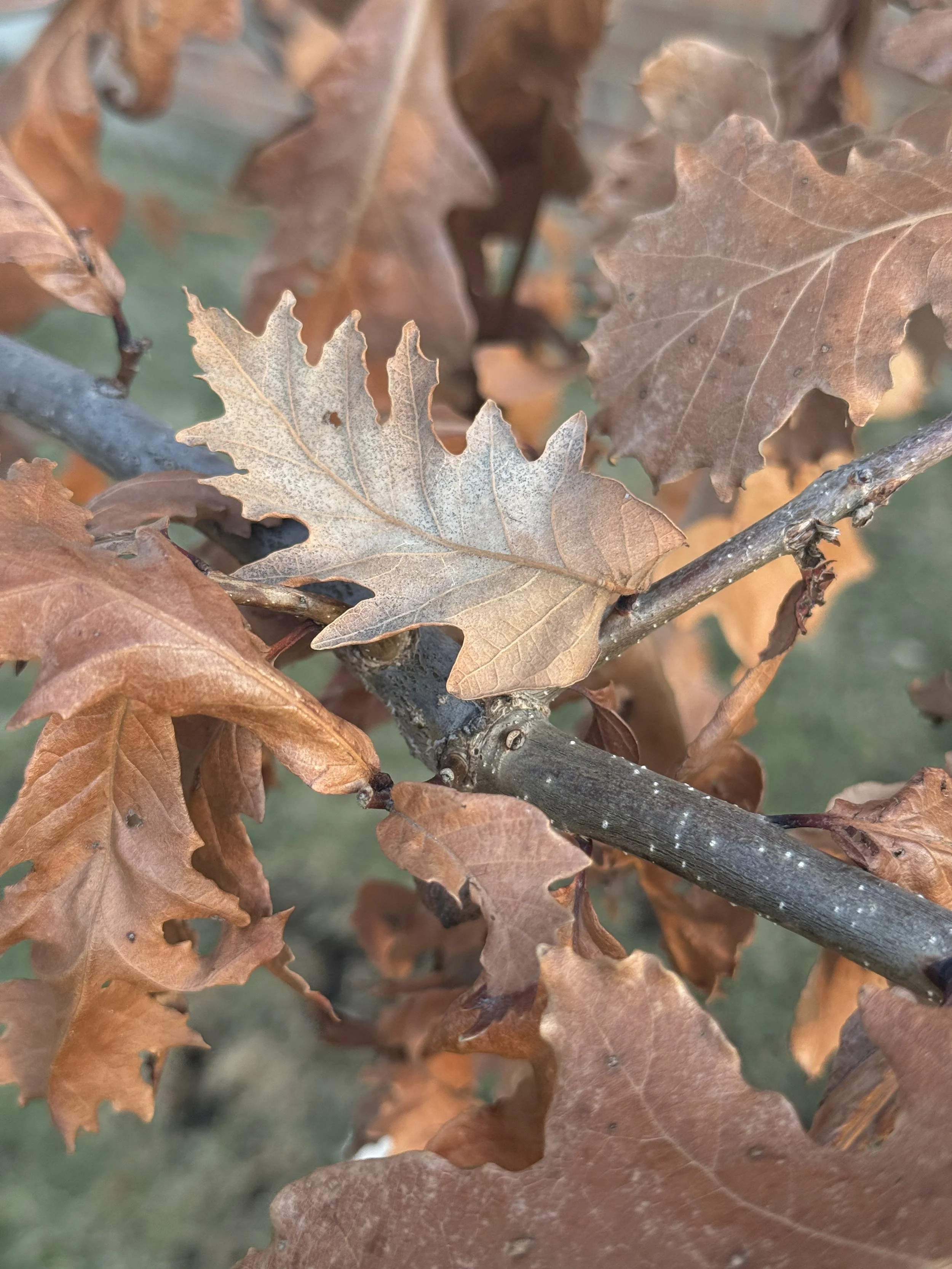
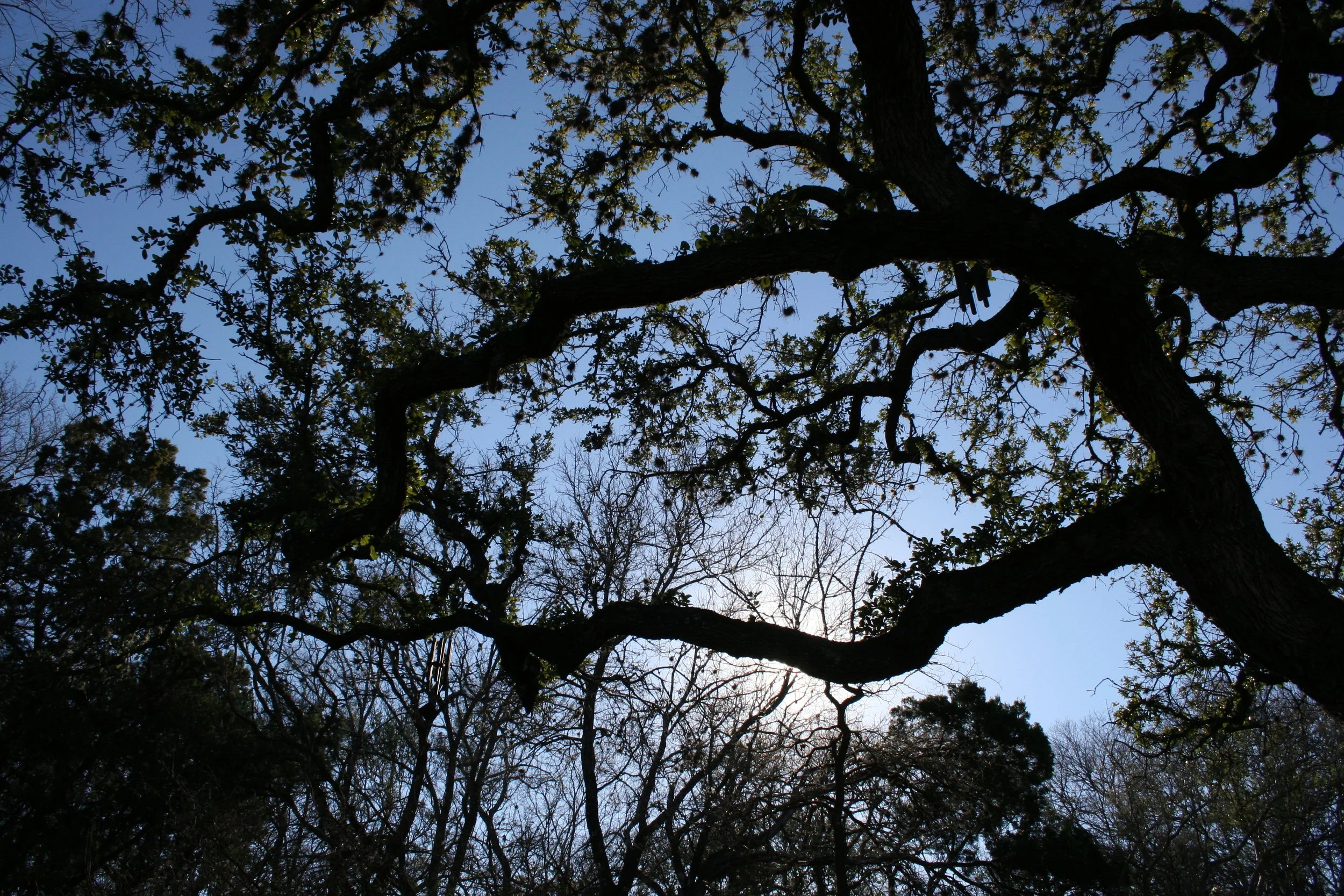
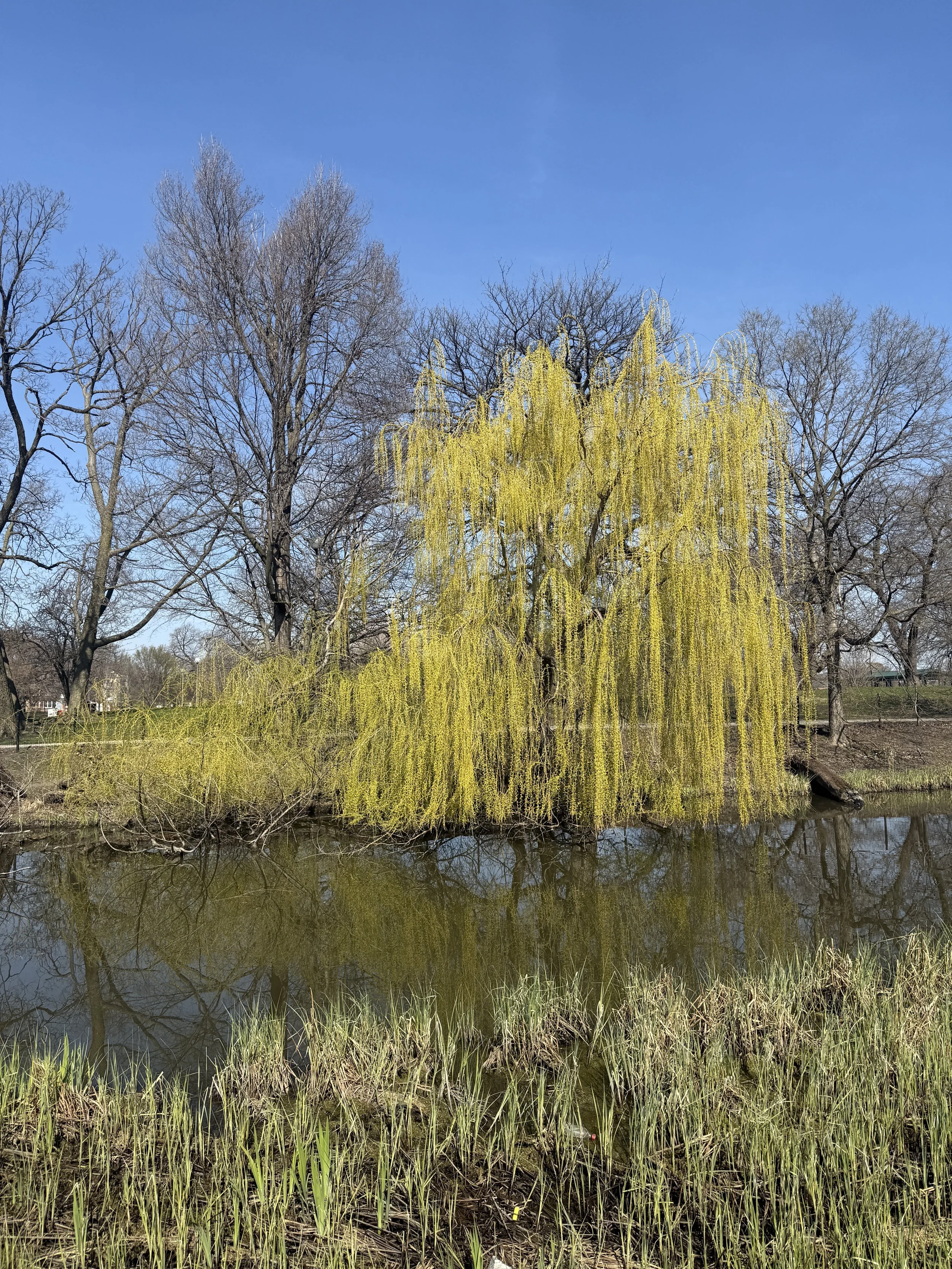
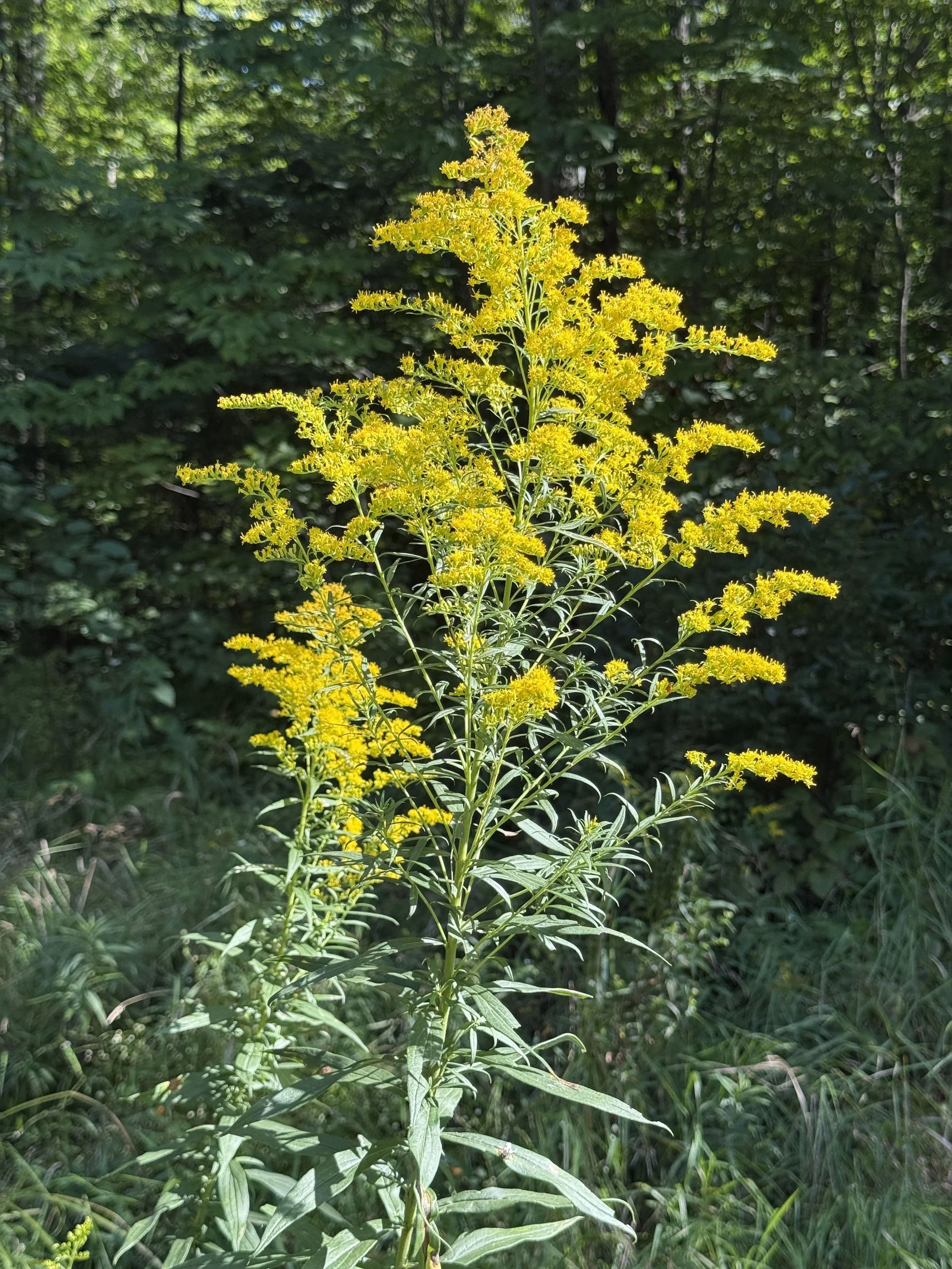
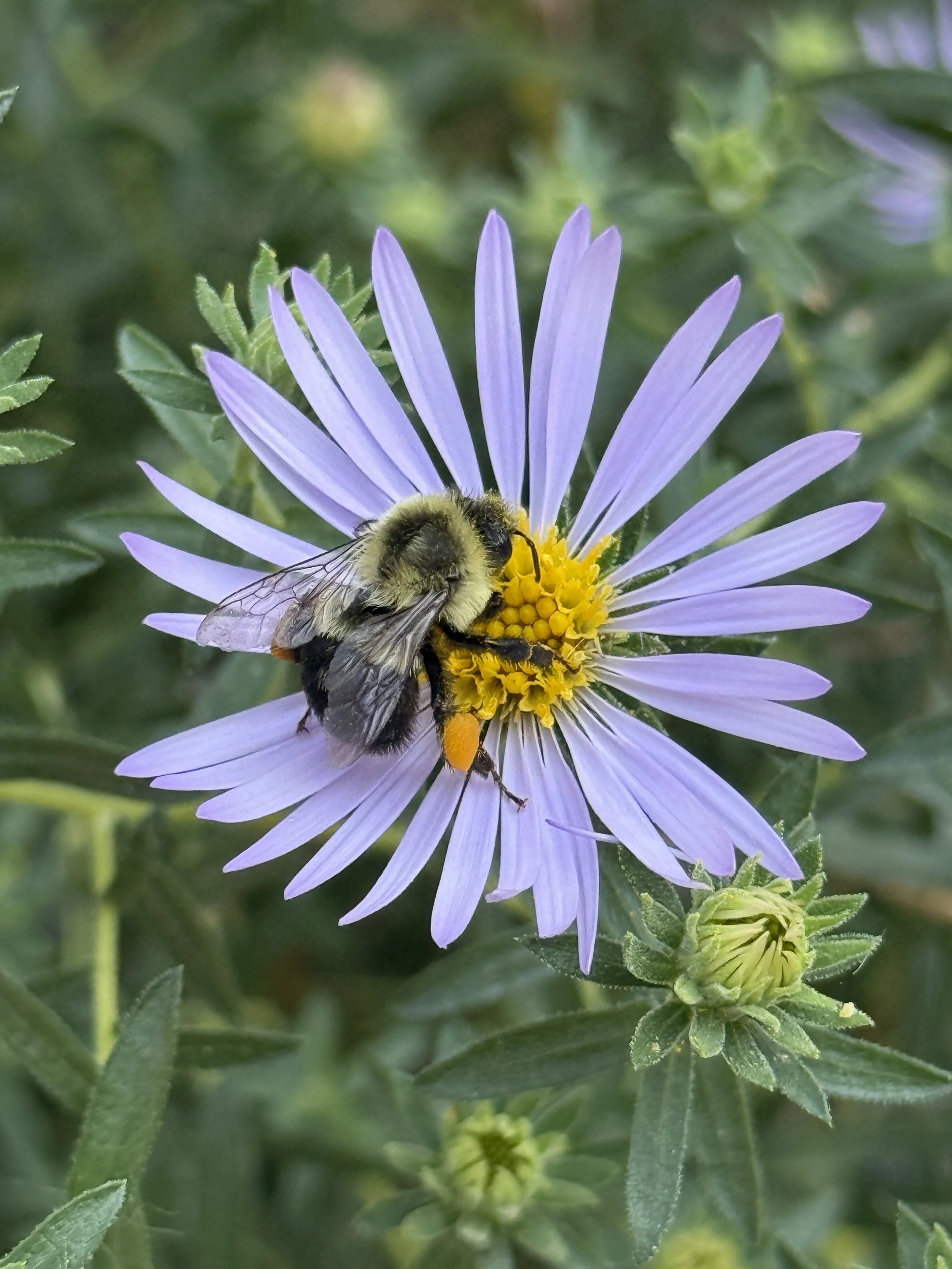
This pattern is repeated throughout nature. Hundreds of moth and butterfly species rely on oak trees (Quercus spp.) as host plants for their caterpillars. Willows (Salix spp.) provide essential early-season pollen for native bees when few other plants are blooming, while also supporting larval insects that feed migrating birds. Goldenrods and native asters fuel pollinators in late summer and fall, a critical window when insects and birds are preparing for migration or winter.
Some keystone plants native to the Chicago & Midwest regions include:
Oaks (Quercus spp.) – support hundreds of caterpillar species, feeding countless birds
Willows (Salix spp.) – early-season pollen and larval host plants for insects and birds
Goldenrods (Solidago spp.) – late-season nectar powerhouse for bees and butterflies (Note: ragweed is the plant that affects allergies (not Goldenrod)
Native asters (Symphyotrichum spp.) – essential fall fuel for pollinators
Milkweeds (Asclepias spp.) – the sole host plant for monarch caterpillars and a nectar source for adults
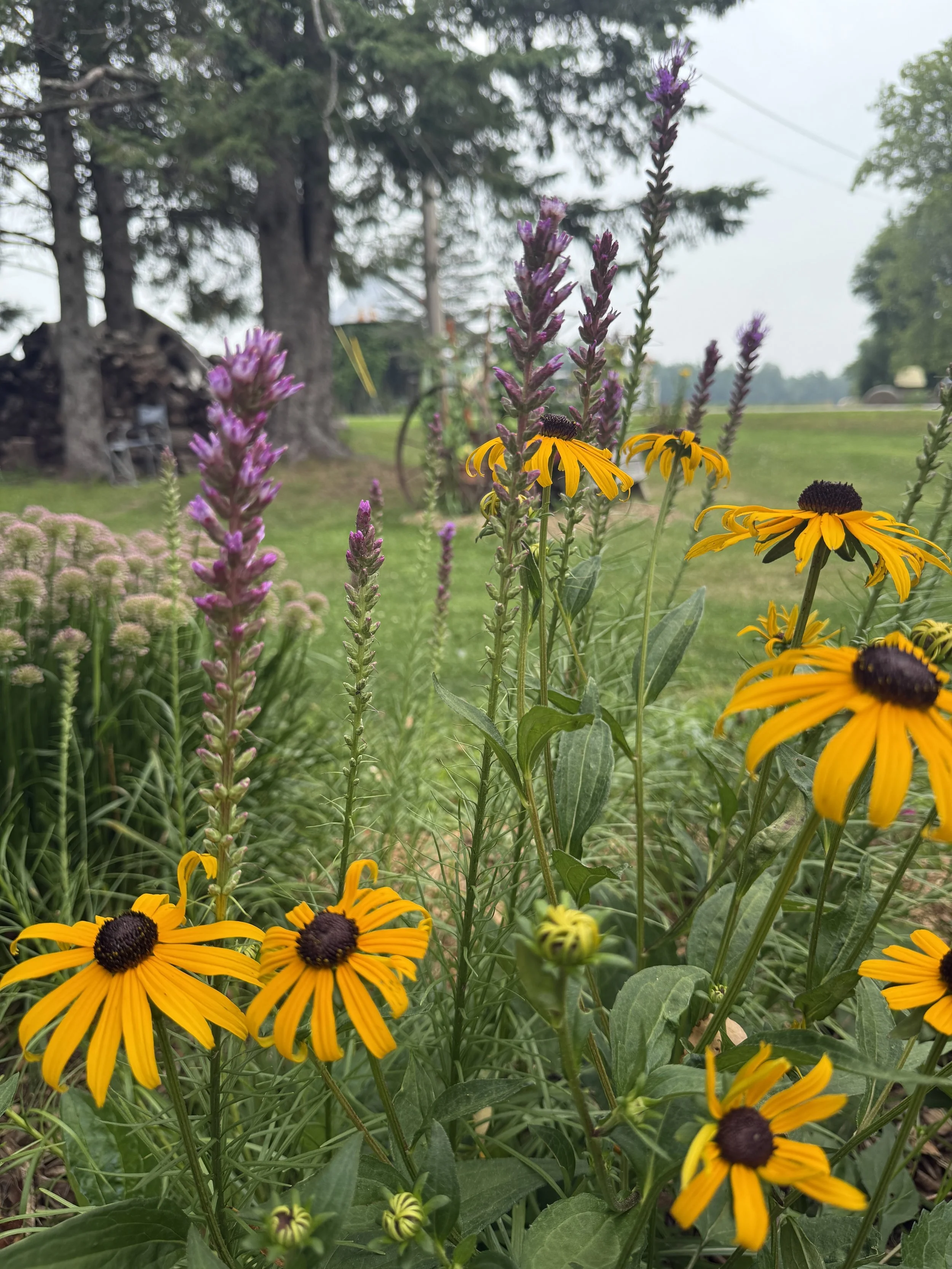
The power of keystone plants is that you don’t need many to make a difference. Even one oak tree, a small patch of milkweed, or a container planted with native asters can support dozens (or even hundreds) of species. In urban and residential landscapes, these small choices collectively rebuild habitat, reconnect broken food webs, and help restore balance where it has been lost.
Small Yards, Big Stewardship
You don’t need a large property to participate in ecological repair. Stewardship is less about the size of your space and more about how intentionally it functions. For homeowners with limited space, meaningful action can take many forms:
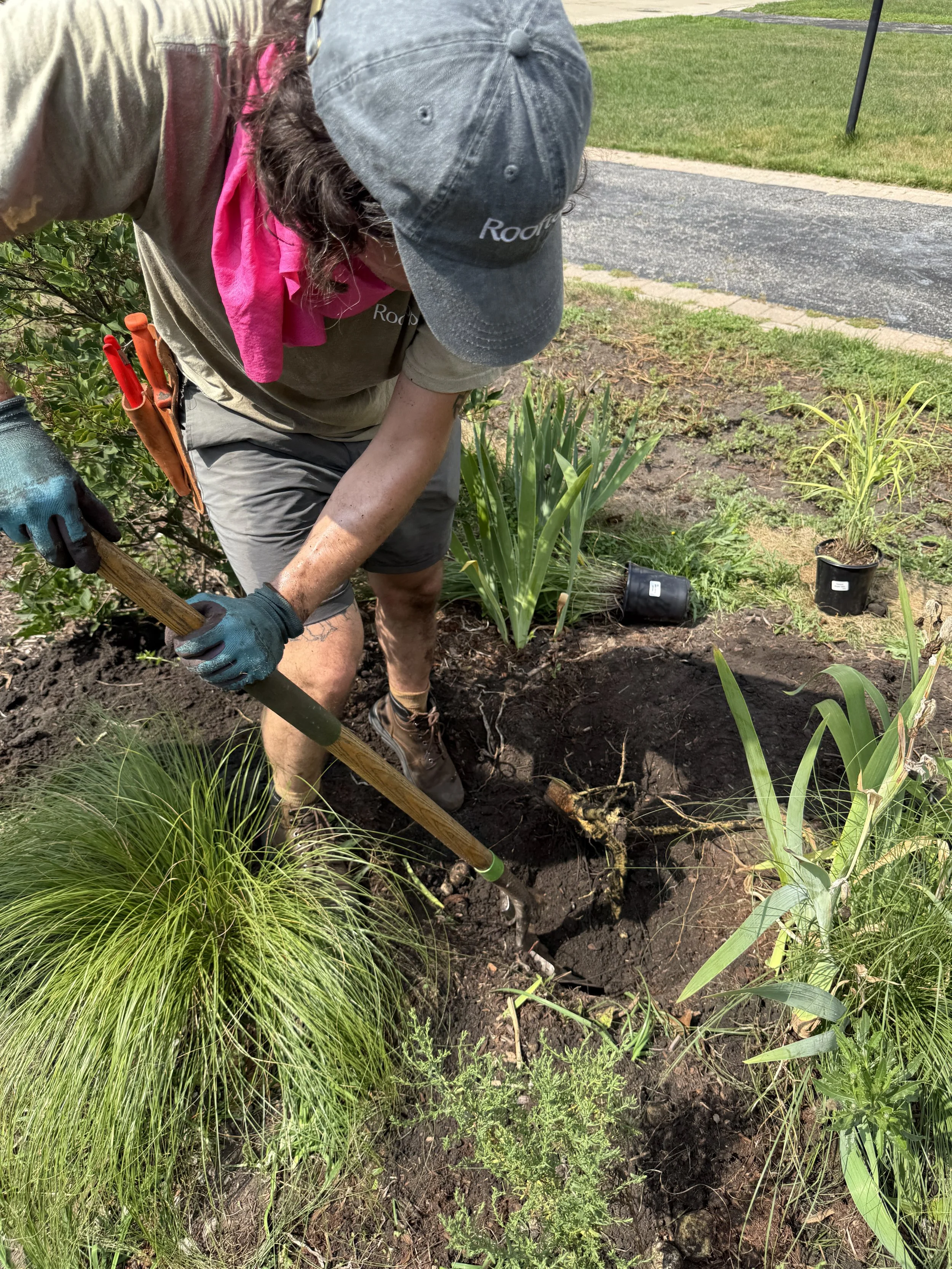
Convert a portion of lawn or your parkway into native planting. Even a narrow strip of native plants provides food and shelter for insects, birds, and pollinators while reducing water use and maintenance.
Replace non-native or invasive shrubs—such as boxwood or burning bush—with flowering native species that support insects throughout the growing season.
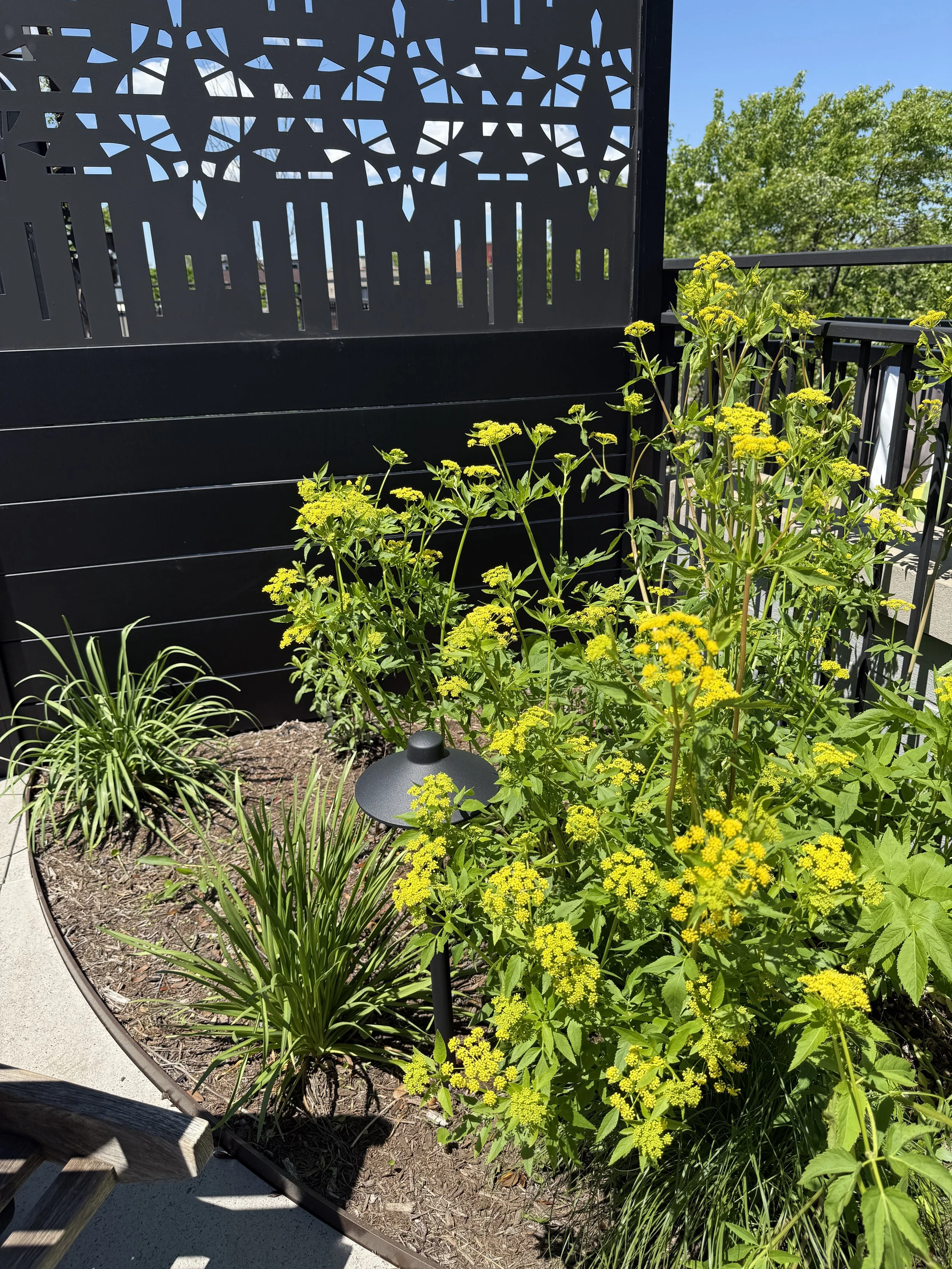
Use containers and rooftops as habitat. Plant milkweed, coneflower, asters, goldenrod, or native grasses in pots on balconies, rooftops, and patios to provide nectar, host plants, and shelter in otherwise hardscaped spaces.
Let leaves stay where they fall. Fallen leaves are not waste—they are essential habitat for overwintering insects, including butterflies and native bees, and they enrich soil naturally.
Avoid pesticides, herbicides, and bug zappers. These tools kill indiscriminately, harming beneficial insects that pollinate crops, feed birds, and keep ecosystems functioning.
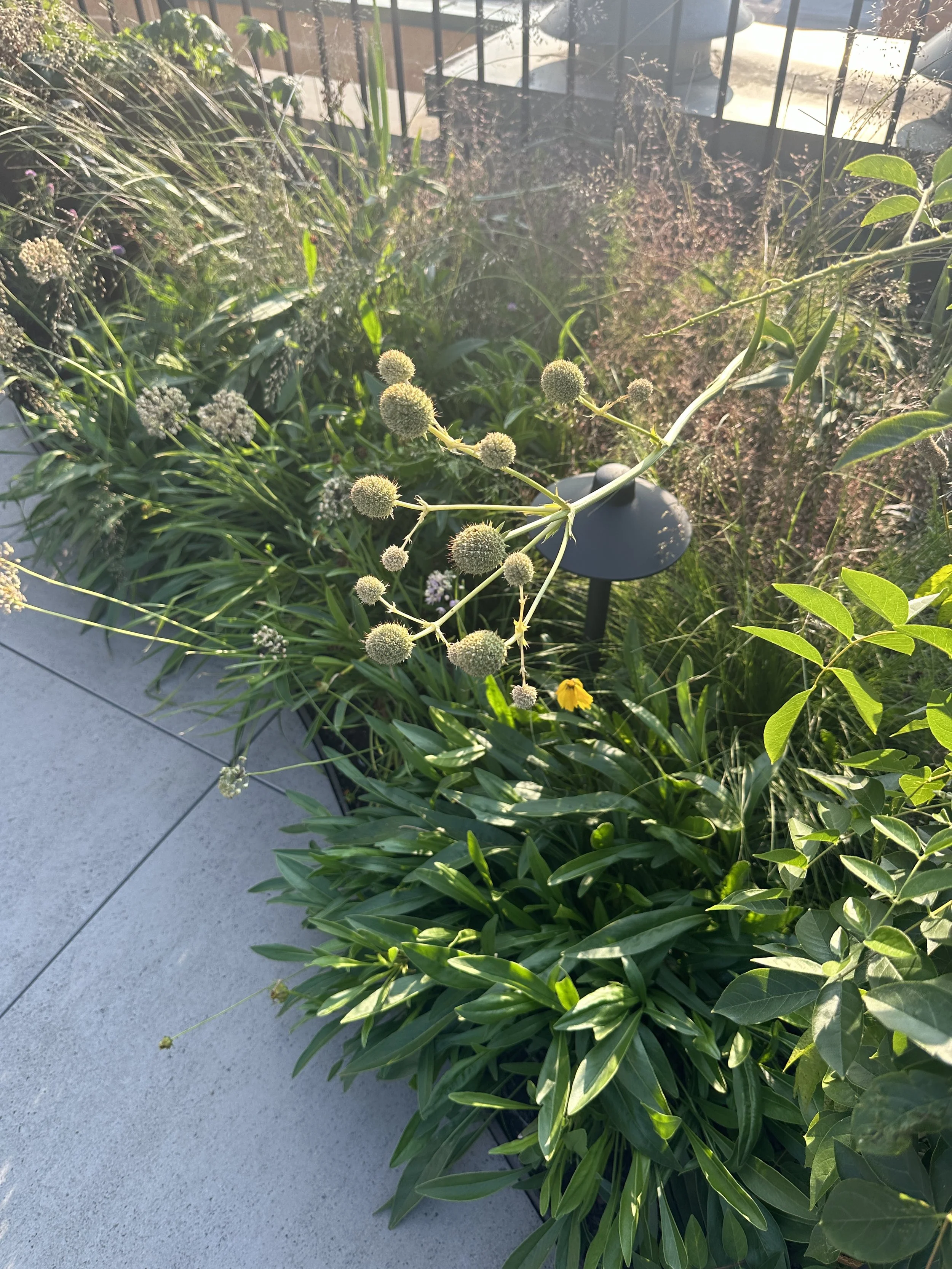
Reduce Light Pollution for Migrating birds & Insects. Install motion sensor lighting, turn lights off at night, convert light fixtures to yellow bulbs (2200 - 3000 max Kelvin) Rooftopia can help with your landscape lighting conversion!
Shift your mindset. A healthy garden is alive with insects. Recognizing their role—and allowing them the space to exist—means understanding that human survival and insect survival are deeply intertwined.
Every square foot returned to native planting helps rebuild habitat and strengthen the food web. These small, collective actions support pollinators, birds, soil health, and ecosystem stability—quiet but powerful steps toward a healthier future for both people and the planet.
Rethinking the Lawn
Large lawns are among the least productive landscapes ecologically. They provide almost no food for wildlife while requiring significant water, fertilizer, fuel, and ongoing maintenance.
Converting even part of a lawn to native planting:
Reduces water use
Eliminates chemical inputs
Supports pollinators and birds
Improves soil health
Creates a more resilient landscape over time
This shift isn’t about giving something up. It’s about coexistence—recognizing that human health, food systems, and climate resilience depend on functioning ecosystems.
Invasive Plants to Be Mindful Of in Chicago & Beyond
Stewardship also means knowing what not to plant—and what to remove when possible. Several commonly planted ornamentals in the Chicago region are now recognized as invasive, spreading aggressively and displacing native species.
Key invasives to be mindful of include:
Callery pear (Bradford pear) – weak-wooded, invasive, and ecologically barren (also known as the trees with white flowers that smell bad in spring)
Burning bush (Euonymus alatus) – spreads into natural areas, displacing natives, has brilliant red fall color that is gorgeous, but there are so many other gorgeous shrubs with fall color
Buckthorn (Rhamnus cathartica & Frangula alnus) – alters soil chemistry and outcompetes understory plants
Japanese barberry (Berberis thunbergii) – linked to increased tick populations
English ivy (Hedera helix) – smothers trees and native groundcovers
Removing invasives and replacing them with native species is one of the most impactful actions a homeowner can take.
Stewardship Is an Act of Hope
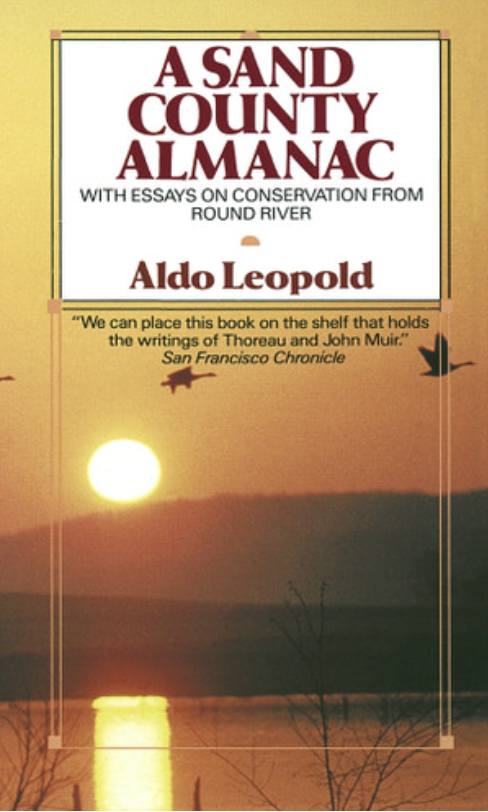
Ecologist Aldo Leopold famously wrote that we need to see ourselves as “plain members and citizens” of the land community. Stewardship begins with that mindset.
The future of conservation doesn’t rest only in parks and preserves—it lives in our yards, balconies, rooftops, and neighborhoods. Especially in cities like Chicago, where green space is fragmented, homeowners collectively hold enormous ecological power.
Planting natives is not about going backward. It’s about moving forward with intention, creating landscapes that are beautiful, functional, and alive.
By choosing native plants, we support pollinators, birds, soil health, and ultimately ourselves. Quiet, thoughtful change—multiplied across many small spaces—has the power to shape a healthier future.
How Rooftopia Can Help?
If you’re feeling inspired but unsure where to begin, Rooftopia’s fine gardening team is here to help. We work with homeowners to thoughtfully design and implement native gardens that fit the scale, conditions, and realities of urban spaces. From small landscapes, backyards and parkways to courtyards, rooftops, and container gardens; we’ve got you covered!
Whether you’re looking to replace a portion of lawn, remove invasive plants, or create a pollinator-focused planting that supports birds and caterpillars year-round, we guide the process of renovating your space with care, attention to detail, ecological knowledge, and long-term stewardship in mind.
Reach out to learn how we can support your outdoor space, and your role in restoring habitat, one garden at a time.
If you enjoy this article, please sign up to get our monthly newsletter and follow along on Instagram as we highlight a new native plant every month!
Recommended Reading & Resources
Reconnecting with nature doesn’t require expertise or expensive gear—just curiosity and a willingness to slow down. Sometimes the most powerful shift begins by stepping outside and paying attention.
Ways to Reconnect with Nature (Right Where You Are)
Go birdwatching with a local group or visit places like the Montrose Point Bird Sanctuary, where migration brings an incredible diversity of birds through the city each year. You don’t need to know their names—just noticing them is enough to begin.
Take longer, slower walks in one of Chicago’s many parks or along the lakefront. Pause often. Look closely at plants, trees, and the ground beneath your feet.
Photograph a plant or flower that catches your eye and take a moment to see who’s visiting it—bees, flies, caterpillars, beetles. You may be surprised how much life is there when you stop to look.
Join a local walking, hiking, or nature group. Shared outdoor experiences are a powerful way to build community while deepening your connection to the land.
Spend time outdoors with others. Attend a guided nature walk, volunteer at a restoration site, or simply meet a friend for a walk instead of coffee indoors.
Garden with curiosity—especially with kids. Plant a simple container of dill, parsley, or milkweed and watch for caterpillars together. Observing a life cycle up close is one of the most meaningful ways to understand our connection to nature.
These small moments of attention help us remember that nature isn’t somewhere else—it’s right here, woven into our neighborhoods and daily lives.
Recommended Reading
For those who want to explore these ideas more deeply, the following books are excellent starting points:
A Sand County Almanac – Aldo Leopold
Bringing Nature Home – Douglas W. Tallamy
Nature’s Best Hope – Douglas W. Tallamy
How Can I Help? – Douglas W. Tallamy
The Living Landscape – Rick Darke & Douglas W. Tallamy
Planting in a Post-Wild World – Thomas Rainer & Claudia West
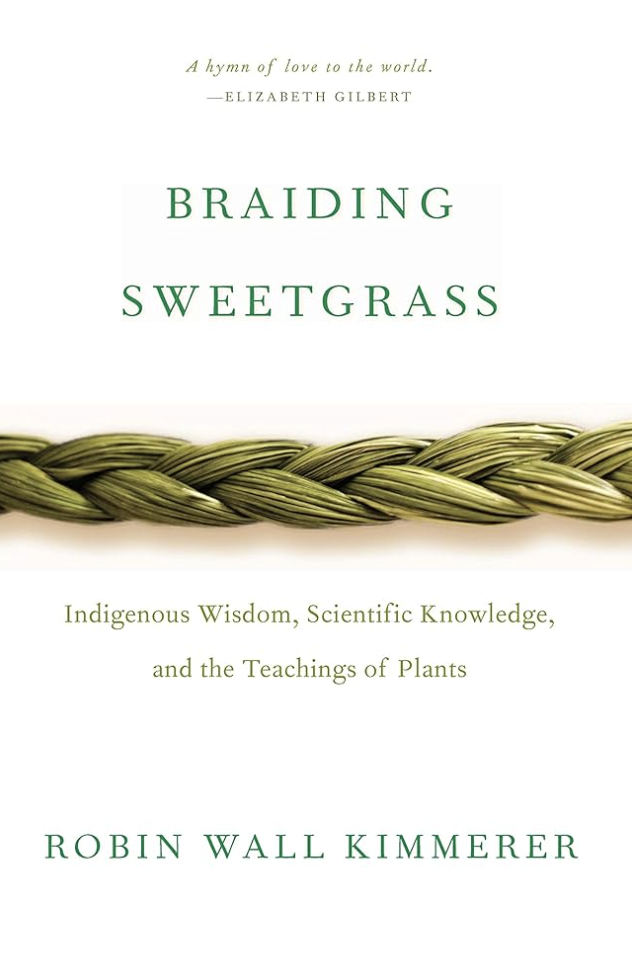
Braiding Sweetgrass – Robin Wall Kimmerer
Together, these works offer science, philosophy, and practical guidance for reconnecting with our landscapes—and for remembering our place within the living world.